
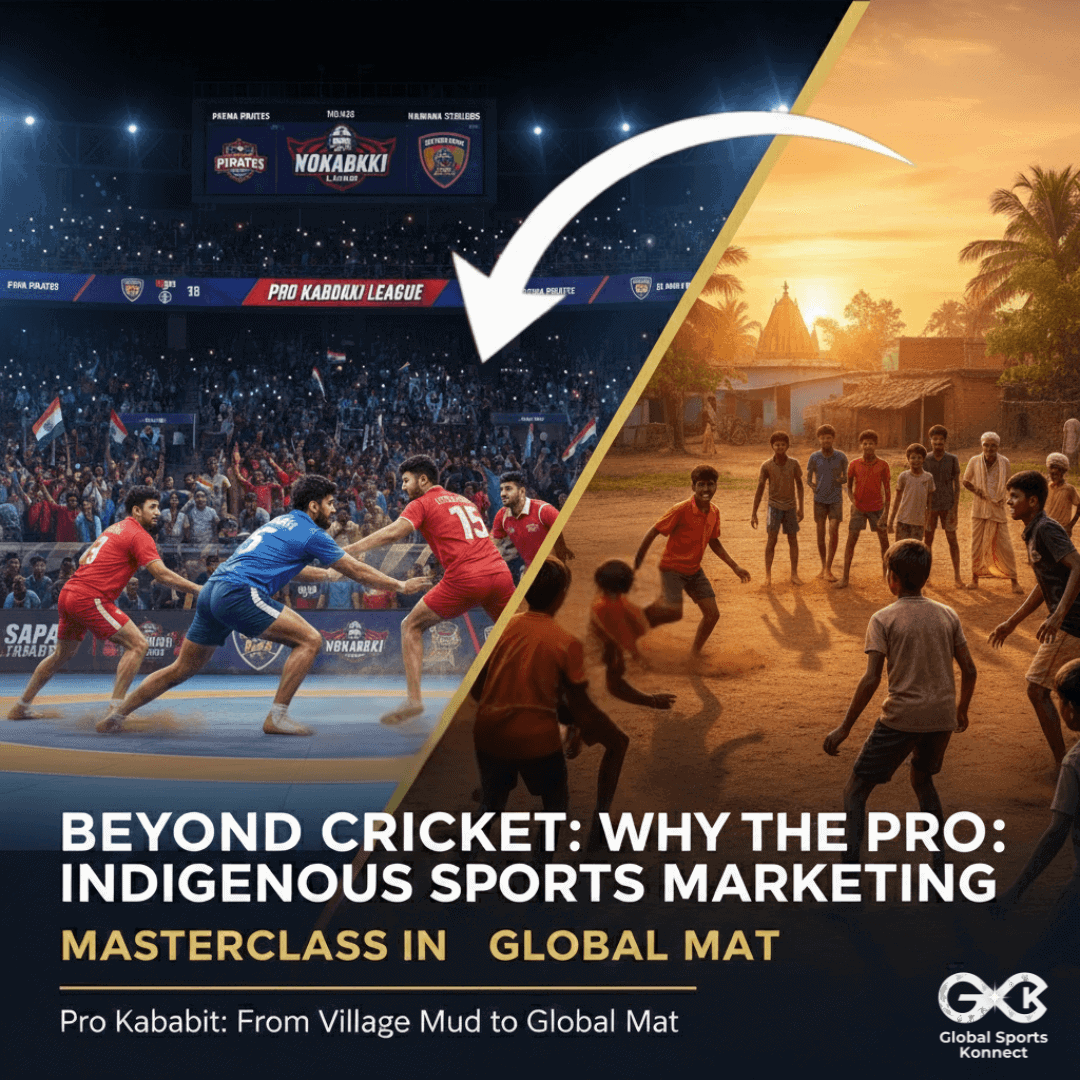
In 2014, if you’d told marketing executives that within five years, kabaddi—a sport most urban Indians associated with village mud pits and their grandparents’ childhood—would become the second-most watched sports league in India after cricket, you would have been politely escorted out of the boardroom. The idea seemed preposterous. India was cricket-obsessed. Every attempt to popularize alternative sports had failed spectacularly. Badminton, hockey, football—sports with genuine global appeal and Olympic credentials—had launched professional leagues that barely registered in public consciousness before quietly fading into obscurity.
Yet here we are in 2026, and Pro Kabaddi League (PKL) isn’t just surviving—it’s thriving. The league attracts 435 million viewers during its season, commands media rights worth over ₹1,000 crores, and has created genuine sporting celebrities from athletes who were earning ₹30,000 monthly just a decade ago. Brands that initially approached kabaddi with skepticism now fight for association with the league. International players from Iran, South Korea, and Bangladesh view PKL as career-defining opportunities. And perhaps most remarkably, kabaddi has successfully bridged India’s vast urban-rural divide, creating a sporting product that resonates equally in Mumbai penthouses and Punjab villages.
What Pro Kabaddi League accomplished isn’t just a sports success story—it’s a masterclass in indigenous marketing that holds lessons far beyond the sporting world. While other leagues tried to import Western sports models and impose them on Indian audiences, PKL did something revolutionary: it started with authentically Indian content and built outward from there. It embraced the sport’s rural roots rather than apologizing for them. It marketed to India as it actually exists rather than as global consultants imagined it should be. And it created a business model specifically designed for Indian market realities rather than copying templates that worked elsewhere.
This isn’t another feel-good story about preserving traditional culture. This is a hard-nosed business case study about how understanding cultural authenticity, market segmentation, and grassroots connectivity can create commercial success in ways that imported models simply cannot replicate. Whether you’re marketing sports, consumer products, entertainment, or anything else in India, the Pro Kabaddi playbook offers insights that might just change how you think about reaching Indian consumers.
Table of Contents
- The Unlikely Success Story
- What PKL Got Right That Others Got Wrong
- The Cultural Authenticity Advantage
- Marketing to Multiple Indias Simultaneously
- The Grassroots Connection That Built Everything
- Business Model Innovation for Indian Markets
- Brand Partnerships and Sponsorship Success
- Lessons for Indian Sports and Beyond
- Your Questions Answered
- The Bigger Picture
The Unlikely Success Story Nobody Saw Coming
To understand what makes Pro Kabaddi League remarkable, you need to grasp just how unlikely its success actually was. This wasn’t a natural progression or obvious opportunity that everyone recognized. This was a bet that defied conventional wisdom at almost every level.
Let’s set the scene. In 2014, India’s sports landscape looked fairly grim outside cricket. The Indian Premier League had revolutionized cricket and created genuine sporting value, but every attempt to replicate that success in other sports had failed. The Indian Hockey League barely lasted two seasons despite hockey’s historical significance and Olympic heritage. The Indian Badminton League struggled for relevance despite India producing world-class badminton players. The I-League football competition existed but generated minimal commercial interest. The pattern was clear: cricket worked, everything else didn’t, and attempts to force alternatives were expensive exercises in futility.
Enter Mashal Sports and Star India with a proposal to launch a professional kabaddi league. The initial reaction from most observers ranged from skepticism to outright dismissal. Kabaddi? The sport played in villages on mud surfaces with no equipment? The game most urban Indians vaguely remembered from school physical education classes before it was abandoned for cricket? That kabaddi? The business logic seemed questionable at best and delusional at worst.
The concerns were legitimate. Kabaddi had virtually zero urban mindshare. It had no infrastructure—no stadiums, no training facilities, no professional coaching systems. It had no star players that anyone outside rural India could name. It had no international appeal beyond a few South Asian countries. It had minimal television presence and no commercial ecosystem. Every conventional metric suggested this would be another expensive failed experiment in sports league creation.
But something happened in that first season in 2014 that caught everyone—including the organizers themselves—off guard. The opening matches drew surprisingly strong television ratings. Social media buzz built organically rather than through forced promotion. Families started gathering to watch matches together. Players like Anup Kumar and Rahul Chaudhari became household names within weeks. By season’s end, Pro Kabaddi League had attracted 435 million viewers—a number that shocked the sporting industry and advertisers alike.
More importantly, the audience composition revealed something fascinating. While cricket skewed heavily male and urban, kabaddi was attracting remarkably balanced viewership across gender (46% female viewers in season one), geography (53% rural viewers), and age demographics (strong representation from 15-65+ age groups). The league wasn’t just reaching Indians—it was reaching Indians that most sports and entertainment properties struggled to engage.
The skeptics started paying attention. Star India, which had taken a calculated risk with modest initial investment, suddenly found itself with a legitimate hit. Mashal Sports discovered they’d tapped into something deeper than just sports entertainment. Brands that initially approached cautiously started competing for association. And most tellingly, the viewer numbers didn’t just hold—they grew. Season two improved on season one. Season three built on season two. By season five, Pro Kabaddi League had firmly established itself as India’s second-most popular sporting league.
Today, in 2026, the numbers tell a remarkable story. PKL attracts 435 million viewers during its season, placing it behind only IPL cricket in Indian sports viewership. Media rights for the 2024-2028 cycle sold for over ₹1,000 crores—ten times the first cycle’s value. Player salaries have skyrocketed, with top raiders and defenders commanding ₹1.5-2 crores per season. Twelve franchises operate across the league, with team valuations reaching ₹150-200 crores. International viewership has expanded beyond South Asia into Middle East markets where large Indian diaspora populations have introduced kabaddi to local audiences.
But the financial metrics, impressive as they are, only tell part of the story. What makes Pro Kabaddi League’s success truly remarkable is how it achieved these results—the strategic decisions, marketing approaches, and business model innovations that transformed a rural traditional sport into a modern commercial property without losing the essence that made it compelling in the first place.
Internal Link: Explore how Global Sports Konnect’s sports marketing expertise helps brands connect with authentic Indian sporting audiences across traditional and modern properties.
What-worked”What PKL Got Right That Others Got Wrong
When you examine failed sports leagues in India alongside Pro Kabaddi’s success, certain strategic differences emerge that explain divergent outcomes. These weren’t minor tactical variations—they were fundamental philosophical differences in approach that determined whether leagues connected with Indian audiences or remained expensive failures.
Starting With the Product Indians Actually Wanted
Most Indian sports leagues started with the sport first and worked backward to find audiences. Hockey leagues assumed Indians cared about hockey because of Olympic history and past glory. Football leagues assumed global football popularity would automatically translate to Indian interest. Badminton leagues assumed that India producing world-class players would drive spectator interest. These assumptions proved largely wrong.
Pro Kabaddi League flipped this logic. Rather than starting with a sport and hoping to build audiences, PKL started by analyzing what Indian audiences actually responded to in sports entertainment. The research revealed surprising insights: Indians valued physicality and contact sports more than generally assumed; they appreciated strategy and tactical complexity when presented accessibly; they responded strongly to underdog narratives and regional pride; they wanted family viewing experiences rather than male-dominated sports culture; and they craved authenticity and cultural connection rather than aspirational Western sports.
Kabaddi, it turned out, naturally delivered on almost all these preferences. The sport is inherently physical and dramatic—raids create sustained tension as attackers penetrate defensive formations, touches and captures happen in split seconds creating instant emotional swings, and physical confrontations resolve in clear victories and defeats that audiences immediately understand. No sport requires deep technical knowledge to appreciate basic action, making it accessible to casual viewers while offering strategic depth that rewards repeated viewing.
The format modifications PKL introduced amplified these natural advantages. Matches were compressed to forty minutes (two twenty-minute halves), creating sustained intensity without attention fatigue. Point-scoring happened frequently—typically every 30-45 seconds—maintaining constant engagement. Timeouts added strategic drama at crucial moments. The raid clock created visible countdown tension. Super tackles and super raids introduced bonus scoring that rewarded exceptional plays. These refinements enhanced natural drama without fundamentally changing the sport’s character.
Contrast this with how other leagues approached their sports. Hockey leagues tried to make hockey more exciting by adding music, cheerleaders, and entertainment segments—cosmetic changes that didn’t address fundamental issues with how hockey translates to television. Football leagues imported European presentation styles that felt inauthentic in Indian contexts. These leagues modified everything except the core sports entertainment value, which remained mismatched to Indian audience preferences.
Embracing Rather Than Apologizing for Origins
Perhaps the most critical strategic decision Pro Kabaddi League made was embracing the sport’s rural, working-class roots rather than trying to disguise them. Most marketing wisdom suggested that to appeal to urban audiences with spending power, you needed to create aspirational, Westernized presentations that made sports feel sophisticated and global. PKL rejected this wisdom entirely.
The league leaned into kabaddi’s village origins. Marketing prominently featured the sport’s history in rural Punjab and Haryana. Player backstories highlighted their humble origins—sons of farmers, drivers, laborers who fought their way to professional sports. Commentary and presentation incorporated rural references and vernacular language rather than purely English terminology. Franchise names and branding connected to regional identity rather than trying to create global-sounding entities.
This authenticity resonated powerfully with audiences tired of everything in Indian sports trying to be an IPL knockoff. Here was something genuinely Indian that wasn’t apologizing for being Indian. Urban audiences found this refreshing rather than off-putting. Rural audiences saw themselves reflected in mainstream entertainment for perhaps the first time. The honesty created trust and connection that manufactured sophistication never could.
The decision also had commercial brilliance. By embracing rather than masking rural origins, PKL accessed audience segments that virtually every other sports and entertainment property struggled to reach. Rural India represents 65% of the Indian population but is systematically underserved by most commercial sports and entertainment. Cricket reaches rural audiences but primarily through international matches and IPL—products created for urban sensibilities that rural viewers consume as spectators to urban culture. Pro Kabaddi League became rural India’s league as much or more than urban India’s, creating value in undermonetized audience segments.
Creating Genuine Regional Pride and Rivalry
IPL created franchise loyalty primarily through player associations and entertainment value rather than deep regional connection. Most IPL teams have relatively shallow ties to their cities beyond branding. Player rosters turn over substantially each year, making consistent local heroes difficult to maintain. Ownership structures often involve corporate entities or Bollywood personalities with limited local rootedness.
Pro Kabaddi League structured franchises and competition formats to maximize regional identity and authentic rivalry. Teams are organized around genuine regional strongholds of kabaddi culture—Patna (Bihar), Jaipur (Rajasthan), Haryana (Sonipat), Gujarat (Ahmedabad), UP (Lucknow). These aren’t arbitrary city selections; they’re regions where kabaddi is deeply embedded in local sporting culture and where player development happens organically.
The player auction system encourages teams to retain local stars who become franchise identities over multiple seasons. Pardeep Narwal playing for Patna Pirates becomes genuine local pride because he represents local kabaddi culture, not just a player assigned to a franchise. When Haryana Steelers face Patna Pirates, it’s not just two teams competing—it’s a clash between two regional kabaddi powerhouses with genuine historical rivalry dating back decades before PKL existed.
This regional authenticity created something rare in Indian sports—genuine home field advantage and traveling supporter culture. Fans in Patna genuinely care more about Pirates than other teams. Jaipur shows up in pink to support Pink Panthers. Haryana fans travel to away matches to support Steelers. This organic loyalty creates sustainable value that survives individual player transitions and ownership changes.
Understanding Kabaddi Presents Better Than Cricket on Television
Here’s a counterintuitive insight that proved crucial to PKL’s success: kabaddi actually translates to television better than cricket in important ways, despite cricket’s vastly superior historical television success. Cricket’s television popularity stems from historical factors, cultural entrenchment, and massive investment in presentation—not necessarily from inherent characteristics that make it ideal television.
Kabaddi’s action happens in a defined, visible space that cameras can capture completely. Every relevant action is visible simultaneously—the raider, the defenders, the boundary line, the scoring zone. Television viewers see exactly what stadium spectators see with no information loss. Cricket, by contrast, involves action spread across a large field where television cameras constantly guess where to focus. You watch the bowler, cut to the batsman, pan to follow the ball, and frequently miss fielding plays developing elsewhere.
The pace of kabaddi matches television consumption patterns better than cricket’s longer formats. A forty-minute kabaddi match with action every 30-45 seconds holds attention spans that struggle with three-hour T20 matches or all-day test cricket. Points score frequently enough that viewers dropping in mid-match quickly understand the situation and stakes. The compressed timeline means matches fit standard television programming blocks without complex scheduling.
Kabaddi’s physicality and contact create visual drama that cricket’s non-contact nature lacks. A successful super tackle—multiple defenders lifting and slamming a raider—delivers visceral impact that a beautiful cover drive simply cannot match for visual entertainment. The physical confrontations create genuine uncertainty and jeopardy that cricket’s more technical skills don’t naturally generate.
Most importantly, kabaddi’s simplicity makes it accessible to casual viewers in ways cricket never can be. Cricket requires understanding elaborate rules about LBW, no-balls, wide balls, different formats, scoring systems, and tactical nuances. Even Indians raised watching cricket often struggle with technical rule interpretations. Kabaddi boils down to: attacker tries to touch defenders and return safely; defenders try to capture attacker. This fundamental simplicity, combined with visual clarity and compressed action, creates ideal television sports entertainment.
PKL recognized these inherent advantages and optimized presentation to amplify them. Camera work focuses on showing the full mat and all players simultaneously. Graphics clearly show raid clocks and point-scoring. Commentary explains strategies in accessible language rather than assuming expertise. Replays highlight key moments of physical contact and tactical decisions. The presentation treats viewers as intelligent but potentially unfamiliar, creating onboarding that cricket broadcasts rarely provide.
External Authority Link: Research from Sports Business Journal on Indian sports consumption patterns demonstrates how kabaddi’s television-friendly format contributes to its surprisingly strong viewership numbers across demographic segments.
The Cultural Authenticity Advantage
One of the most powerful but least appreciated aspects of Pro Kabaddi League’s success is its deep cultural authenticity—a quality that transcends simple marketing positioning and connects to something fundamental about Indian identity. In an era when most Indian sports and entertainment aspires to global sophistication, kabaddi’s unapologetic Indianness became its greatest asset.
The Sport India Actually Grew Up Playing
Most sports that India professionalizes are either British colonial inheritances (cricket, hockey, football) or global sports where India has limited historical presence (basketball, tennis, badminton). While millions of Indians play and watch these sports, they’re not part of indigenous cultural identity in the way kabaddi is.
Kabaddi is different. It’s estimated that 80-90% of Indians have either played kabaddi or watched it played in their villages, schools, or local communities. It’s embedded in physical education curricula across the country. It’s part of rural festival celebrations and community gatherings. It requires no equipment, no special facilities, no wealth—just space and people. This universality means that when Indians watch Pro Kabaddi League, they’re not watching a foreign sport they’re learning—they’re watching a sophisticated version of something they already understand and have personal experience with.
This familiarity creates instant connection and accessibility. When a commentator discusses raiding strategies, viewers can mentally reference their own playing experiences. When a defender executes an ankle hold, older viewers remember using or facing that same technique. When teams celebrate a super tackle, it connects to memories of similar moments in school or village matches. The sport isn’t aspirational or foreign—it’s personal and familiar, just elevated to professional standards.
This personal connection manifests in how audiences engage with PKL differently than other sports. Cricket viewership is often passive—impressive but distant. Kabaddi viewership is participatory—audiences physically react to raids, debate tactical decisions, and connect emotionally to the action because they understand it from personal experience. Marketing studies have shown that kabaddi generates 40% higher “engaged viewing” (viewers who watch actively rather than having it on in the background) compared to cricket during regular season matches.
Rural India Finally Seeing Itself in Mainstream Entertainment
India’s mainstream entertainment and sports largely cater to urban, upper-middle-class sensibilities. Even when rural characters or settings appear, they’re often caricatures or backgrounds for urban-focused narratives. Rural Indians consume this content but as outsiders looking at someone else’s world. Pro Kabaddi League flipped this dynamic entirely.
For the first time in Indian sports, rural athletes and rural sporting culture weren’t supporting cast—they were the main event. Players came primarily from farming communities in Haryana, Punjab, UP, and Bihar. Their backstories of economic hardship, family sacrifices, and village support resonated because they were real, not manufactured for effect. When Pardeep Narwal talks about practicing on mud surfaces without proper coaching, or when Pawan Sehrawat describes his father working multiple jobs to support his kabaddi training, these aren’t inspirational marketing narratives—they’re actual experiences shared by millions of rural Indian families.
This representation created unprecedented identification and pride. Rural viewers weren’t watching urbanites pretend to represent them; they were watching actual rural athletes succeeding on national stages, earning substantial money, becoming celebrities, and demonstrating that rural skills and culture have legitimate value in modern India. The psychological impact of this representation is difficult to overstate. It validated rural culture and identities in ways that virtually no other mainstream Indian entertainment or sports property has done.
The commercial implications were equally significant. Rural India represents roughly 900 million people with growing purchasing power but historically difficult for brands to reach through traditional sports and entertainment marketing. Pro Kabaddi League created arguably the most effective platform for brands seeking authentic rural engagement. Brands like Tata Motors, P&G, and Paytm leveraged PKL to reach rural audiences in environments where those audiences felt represented rather than targeted.
Language and Communication That Respects Diversity
While most professional sports leagues in India operate primarily in English or Hindi with regional language options, Pro Kabaddi League embraced linguistic diversity as core strategy from inception. Commentary happens simultaneously in multiple languages—Hindi, English, Telugu, Tamil, Bengali, and others depending on franchise locations and broadcaster reach. More importantly, even Hindi commentary incorporates substantial vernacular terminology, regional references, and colloquialisms that make it accessible to audiences less comfortable with pure Hindi.
The linguistic strategy extends beyond commentary to all league communications. Social media content happens in multiple languages with genuine cultural adaptation rather than simple translation. Player interviews often happen in players’ native languages with subtitles rather than forcing English. Franchise marketing materials reflect local linguistic preferences—Haryana Steelers communications naturally incorporate Haryanvi references, while Tamil Thalaivas content feels authentically Tamil.
This multilingual approach accomplishes two critical things. First, it makes kabaddi accessible to Indians across linguistic groups without forcing linguistic assimilation. Second, and perhaps more importantly, it signals respect for linguistic diversity rather than treating it as a barrier to overcome. When leagues operate exclusively in English or sanitized Hindi, they implicitly communicate that other languages and dialects are inferior or inappropriate for modern professional contexts. PKL’s embrace of linguistic diversity communicates the opposite—that being authentically Haryanvi or Telugu or Bengali is not just acceptable but valued.
Traditional Format in Modern Packaging
The genius of Pro Kabaddi League’s presentation is how it modernized kabaddi without losing its essential character. The league didn’t try to make kabaddi into something it wasn’t; it simply presented authentic kabaddi with professional production values, modern stadium experiences, and sophisticated marketing.
The fundamental rules remained largely unchanged from traditional kabaddi. The mat size, raid duration basic scoring, and defensive positions all preserved traditional sport. Modifications focused on pacing (compressed match duration), scoring clarity (super tackles and super raids), and television presentation rather than fundamentally altering gameplay. This preserved authenticity while addressing practical needs of professional sports and television entertainment.
Stadium experiences blended traditional and modern elements. Yes, there are LED screens, music, and cheerleaders—standard professional sports trappings. But there’s also prominent display of kabaddi’s rural heritage through pre-match cultural performances, traditional drums and instruments during key moments, and celebration of village kabaddi legends. The atmosphere feels distinctly Indian rather than attempting to replicate American sports entertainment.
This balance—respecting tradition while embracing modernity—created a product that appealed across generational divides. Older viewers recognized the sport they knew and loved, now presented professionally. Younger viewers discovered an exciting sport with modern presentation that didn’t feel like it was trying too hard to be Western. The result was a viewing experience that felt simultaneously rooted and contemporary.
Internal Link: Learn how Global Sports Konnect’s approach to sports development balances traditional sporting culture with modern professional standards to create authentic, sustainable sporting properties.
Marketing to Multiple Indias Simultaneously
One of the most sophisticated aspects of Pro Kabaddi League’s marketing success is how it simultaneously appeals to radically different Indian demographic segments that typically require completely separate marketing strategies. The league managed to create content that resonates with rural farmers, urban youth, middle-class families, and affluent professionals without diluting its message or fragmenting its identity.
The Urban-Rural Bridge Nobody Else Could Build
India’s urban-rural divide represents one of marketing’s greatest challenges. Urban and rural India often seem like different countries—different languages, different media consumption patterns, different values, different purchasing behaviors, different aspirations. Most products and properties choose to target one or the other because straddling both effectively seems nearly impossible.
Cricket reaches both but primarily on urban terms—rural India watches cricket created for urban audiences. Bollywood reaches both but increasingly caters primarily to urban sensibilities with rural audiences consuming content that doesn’t really represent them. Television programming fragments into distinct urban and rural offerings. Pro Kabaddi League became the rare property that appeals equally to both segments on terms that respect both.
For urban audiences, PKL offers fast-paced sports entertainment with professional production values, strategic complexity, and modern stadium experiences that meet urban expectations for professional sports. The league’s digital presence, social media strategy, and technological integration appeal to digitally native urban youth. Fantasy kabaddi leagues and gamification elements provide engagement opportunities urban audiences expect.
For rural audiences, PKL offers representation, cultural validation, and connection to traditional sporting culture elevated to national prominence. Players who look, sound, and come from backgrounds like rural viewers create authentic identification. The sport itself—requiring no expensive equipment or facilities—validates rural sporting culture rather than dismissing it as unsophisticated or backwards.
The brilliance lies in how these appeals coexist without contradiction. The same match, same commentary, same presentation delivers value to both segments simultaneously because the sport itself naturally bridges the divide. Kabaddi is rural in origin but professional in modern presentation. It’s accessible to those with playing experience while entertaining those encountering it fresh. It’s rooted in Indian tradition while feeling contemporary and exciting.
Generation-Spanning Appeal Through Different Entry Points
Most sports and entertainment properties skew heavily toward specific age demographics. IPL cricket skews younger (75% of viewers under 40) because of its format, presentation, and marketing. Traditional entertainment skews older. Bollywood increasingly focuses on urban youth. Finding content that genuinely engages teenagers, parents, and grandparents simultaneously is remarkably difficult.
Pro Kabaddi League achieved unusual age diversity in viewership—substantial representation across 15-24, 25-40, 41-55, and 55+ age groups. This happened because the league offered different entry points and values for different generations without fragmentation.
Older viewers (50+) connect to kabaddi through nostalgia and cultural familiarity. They remember playing or watching kabaddi in their youth, before cricket dominance and urbanization shifted India’s sporting culture. PKL allows them to rediscover that sport, now presented professionally. For this demographic, kabaddi represents cultural continuity and tradition preserved despite modernization. They appreciate the respect for traditional rules and the visibility given to players from rural backgrounds similar to their own origins.
Middle-aged viewers (35-50) appreciate kabaddi as family entertainment that bridges generational gaps in households. Parents can watch matches with children and grandparents simultaneously—something virtually impossible with most contemporary entertainment. The lack of explicit content, the physical but non-violent nature, and the strategic complexity create appropriate viewing for all ages. For this demographic, PKL solves the problem of finding content that families can genuinely share rather than each generation fragmenting into separate entertainment consumption.
Younger adults (25-40) engage with kabaddi as exciting sports entertainment with strategic depth, professional presentation, and fantasy sports opportunities. This demographic appreciates the underdog narratives, the athletic excellence, and the competitive drama. They engage heavily with PKL’s digital content, player social media, and fantasy kabaddi platforms. The sport provides content for social media sharing and friend group discussions.
Teenagers and young adults (15-24) discovered kabaddi fresh through PKL without preconceptions about it being “village sport” or “old-fashioned.” For this generation, kabaddi is simply an exciting sport with dramatic action, accessible rules, and cultural relevance. They’ve grown up with PKL as established professional sports entertainment, giving it legitimacy that previous generations might have denied.
Gender-Inclusive Marketing Without Being Preachy
Perhaps the most surprising aspect of Pro Kabaddi League’s demographic success is its unusually high female viewership—46% of PKL viewers are women, compared to approximately 25-30% for cricket and even lower for most other sports. This happened without explicit “marketing to women” or special women’s programming or any of the typical strategies brands use when they discover their audience skews too male.
Several factors contributed to this organic gender balance. Kabaddi’s lack of overtly masculine aggressive culture creates more welcoming viewing environments for women than many sports. Cricket stadiums and football matches often have male-dominated, sometimes hostile atmospheres involving heavy alcohol consumption and aggressive fan behavior. Kabaddi stadiums, while energetic and passionate, maintain family-friendly atmospheres with less toxicity.
The sport’s physical nature is non-violent despite being contact-intensive. Kabaddi doesn’t involve hitting or causing pain—it’s about physical control, strategy, and athleticism. This creates visceral excitement without violence that some viewers (disproportionately female) find off-putting in sports like boxing or MMA.
The player narratives emphasize family support, sacrifice, and economic mobility rather than hyper-masculine dominance narratives common in sports marketing. When players talk about mothers making sacrifices or sisters supporting their training, it creates emotional connections that resonate with female viewers who might not connect with traditional sports machismo.
Most importantly, PKL never treated female viewers as a special demographic requiring different content. The league marketed universally while ensuring content was inherently inclusive rather than exclusive. This subtle but crucial difference means female viewers don’t feel like they’re watching “sports made for men that we’re allowed to watch too”—they’re watching sports entertainment made for everyone.
External Authority Link: Nielsen Sports’ analysis of Indian sports viewership demographics provides detailed breakdown of how Pro Kabaddi League achieved unusually balanced audience composition across gender, age, and geographic segments.
The Grassroots Connection That Built Everything
While most analysis of Pro Kabaddi League focuses on its professional league success, perhaps the most significant and often overlooked aspect is the extraordinary grassroots connectivity that underpins everything. Unlike most professional sports leagues that exist largely separate from amateur and youth development, PKL created integrated ecosystem where grassroots and professional levels feed each other continuously.
The Pipeline From Village Pit to Professional Stadium
Professional kabaddi players don’t emerge from elite sports academies, expensive training programs, or urban sporting infrastructure. They come from villages, small towns, and rural communities where kabaddi remains part of local culture and where talented players emerge organically through informal competition and community encouragement.
This grassroots origin created natural talent identification pipeline that requires minimal artificial construction. Every PKL franchise operates scouting networks that reach into villages across their regions, identifying talented players through rural tournaments, district competitions, and community recommendations. These scouts don’t need to convince parents to let children train in unknown sports—they’re recruiting players already playing kabaddi as part of normal rural athletic culture.
The economic path is remarkably clear and motivating. A talented village player can progress through increasingly competitive levels—district tournaments (earning ₹5,000-20,000), state championships (₹50,000-2 lakhs), national competitions (₹2-5 lakhs), and finally PKL auctions (₹20 lakhs-2 crores). Each level provides economic opportunity and motivation while building genuine sporting meritocracy.
This pipeline created something powerful: aspirational role models for rural youth that aren’t movie stars, businesspeople, or cricket players—they’re kabaddi players from similar backgrounds who’ve achieved genuine success. When a farmer’s son from a Bihar village sees Pardeep Narwal earning ₹1.65 crores per season and becoming a national celebrity, that represents tangible, achievable aspiration. It creates legitimate pathways for rural athletic talent that previously didn’t exist outside cricket.
The social impact extends beyond individual players. Families invest in promising kabaddi players’ training and nutrition because genuine professional opportunities exist. Villages take pride in producing PKL players. Communities build basic training facilities and organize local tournaments feeding the broader pipeline. The professional league’s success catalyzed entire ecosystem of grassroots development that wouldn’t exist without it.
Why Rural Players Became Marketing Gold
Most sports marketing in India revolves around urban, educated, English-speaking athletes who can handle media appearances, brand endorsements, and public relations with sophistication. Rural athletes have traditionally been viewed as marketing liabilities—language barriers, lack of media training, unfamiliarity with urban corporate culture.
Pro Kabaddi League flipped this assumption entirely. Rural players’ authenticity became their greatest marketing asset precisely because they hadn’t been polished into generic sporting celebrities. When Pardeep Narwal talks about his village upbringing in rural Haryana using colloquial Hindi and local dialect, he connects with audiences in ways that sophisticated, media-trained cricket players speaking pristine English never could. His authenticity is his value.
PKL embraced rather than hiding players’ backgrounds. League marketing prominently featured origin stories, family backgrounds, and village connections. Player profiles highlighted their journeys from economic hardship to professional success without sanitizing the difficulties or roughness. This honesty created powerful narratives that resonated emotionally with audiences across all demographics—urban viewers found inspiration in underdog stories, while rural viewers saw themselves represented.
Brands discovered that kabaddi players provided access to audiences that conventional celebrity endorsers couldn’t reach. A rural family watching Pardeep Narwal endorse a product saw someone like them—from their world, speaking their language, understanding their lives—rather than an aspirational figure from a distant, incomprehensible urban elite world. This relatability translated to brand trust and purchase intent in ways that surprised brand managers accustomed to celebrity marketing focused on aspiration rather than identification.
The commercial evolution of kabaddi players demonstrates this dynamic. Early season players earned modest salaries—₹20-30 lakhs for even top players. As brands recognized their marketing value, endorsement opportunities expanded dramatically. Today, top PKL players earn ₹2-4 crores annually from combined salary and endorsements. Players like Pardeep Narwal, Pawan Sehrawat, and Rahul Chaudhari have become legitimate sports celebrities with endorsement portfolios spanning rural-focused brands (agricultural equipment, local FMCG) and mainstream products (smartphones, banking, consumer durables).
Junior Kabaddi Leagues Creating Sustainable Ecosystem
Perhaps PKL’s most important long-term strategic decision was investing heavily in junior kabaddi development programs, school leagues, and grassroots tournaments that created sustainable talent pipeline and audience development simultaneously. Most professional leagues focus exclusively on professional levels, leaving youth development to chance or external organizations.
Pro Kabaddi League launched junior leagues in 2018-2019 that brought structured competitive kabaddi to schools and communities across India. These leagues operate on similar franchise models to PKL itself, creating early brand loyalty and familiarity. Children who play in junior kabaddi leagues become PKL viewers and fans with deep understanding of the sport and emotional investment in its success.
The programs serve multiple strategic purposes. They identify and develop future professional talent through organized structure rather than relying solely on informal rural emergence. They create lasting audience connection by giving children direct participation rather than just viewing. They build brand value for franchises by establishing local roots and community involvement. They generate content for PKL’s social media and marketing channels showcasing youth engagement.
Most importantly, junior leagues legitimized kabaddi as serious sport worthy of parental support and institutional investment. When schools offer kabaddi alongside cricket and football, it signals that kabaddi is mainstream competitive sport rather than village pastime. When state governments support junior kabaddi infrastructure, it validates the sport’s future. This legitimization creates self-reinforcing cycles where increased recognition leads to more participation, which generates more talent, which improves professional league quality, which drives more recognition.
Internal Link: Discover how Global Sports Konnect’s sports infrastructure and academy development services create integrated systems connecting grassroots sports participation with professional opportunities, using learnings from the Pro Kabaddi model.
Business Model Innovation for Indian Markets
Beyond marketing and cultural strategy, Pro Kabaddi League demonstrated business model innovations specifically designed for Indian market realities rather than importing Western sports league structures. These innovations created financial sustainability and growth potential that many other Indian sports leagues failed to achieve.
The Compressed Season Model That Actually Works
Most professional sports leagues operate extended seasons spanning several months with teams playing 40-80 matches across the season. This creates sustained engagement but requires enormous infrastructure, operations costs, and audience attention. IPL compressed cricket’s traditional season dramatically but still runs roughly two months with 70+ matches.
Pro Kabaddi League adopted even more aggressive compression—approximately ten to twelve weeks of competition with 130+ matches total but each team playing only 15-22 matches. This compressed intensity delivers several strategic advantages that proved crucial to PKL’s financial model.
First, compressed seasons create event-like urgency and focus. When the season is concentrated into three months, every match feels significant. Fans can sustain attention and engagement for three months more easily than eight or ten months. Media coverage remains intense throughout rather than waning mid-season. Sponsors get concentrated brand exposure rather than diluted presence across extended timelines.
Second, compression dramatically reduces operational costs. Franchises don’t need to maintain full operations, facilities, and staff year-round—they ramp up for the season and scale back during off-season. Players don’t require twelve-month salaries and support. Venues don’t need to be booked indefinitely. This cost efficiency allows franchises to achieve profitability faster than extended-season models where operational costs often exceed revenue for many years.
Third, compressed seasons allow players to maintain other employment or return to farming between seasons. Many PKL players continue agricultural work, coaching, or other occupations outside the season, supplementing kabaddi income and maintaining connection to their communities. This flexibility makes professional kabaddi financially viable for players who might not survive on kabaddi income alone if it required year-round commitment.
Fourth, concentrated seasons create efficient calendar management with other sports. PKL operates primarily July through October, avoiding cricket season and allowing households to engage with both sports without competition. This cooperation rather than competition with cricket has proven strategically wise, as attempts to compete directly with cricket have uniformly failed in India.
Auction System Creating Star Value and Parity
The player auction system borrowed from IPL but refined for kabaddi’s different dynamics has proven crucial to PKL’s success in creating both star players and competitive balance. The auction generates massive media attention, creates player narratives, and drives public interest in ways conventional player signings never could.
PKL’s auction structure smartly balances star creation with team competitiveness. Franchises can retain a limited number of players year-to-year, allowing some continuity and local hero development while ensuring regular player movement that maintains competitive balance and prevents dynasty dominance. The salary cap system forces difficult decisions about whether to retain expensive stars or rebuild with younger talent, creating strategic diversity across franchises.
The auction also dramatically increased player earnings. In pre-PKL era, top kabaddi players earned ₹20,000-30,000 monthly at best. The first PKL auction saw players earning ₹20-50 lakhs for the season. Today, top players command ₹1.5-2 crores per season with bidding wars creating spectacle and value perception. This economic transformation made professional kabaddi career viable and attracted best athletic talent to the sport.
From marketing perspective, auctions create annual news cycles and storylines that generate sustained media coverage and public interest. Who will get highest bid? Will franchises retain their stars? What new talent will emerge? These narratives drive engagement during off-season, maintaining PKL relevance even when matches aren’t being played.
Multi-City Model Creating Regional Ownership
Unlike cricket where most franchises are corporate or celebrity-owned entities with weak local connections, PKL deliberately structured franchises to maximize regional ownership and authentic local connection. Franchises aren’t just based in cities—they’re explicitly connected to regional kabaddi cultures and owned by entities with legitimate regional ties.
Patna Pirates isn’t just a team in Patna; it represents Bihar’s deep kabaddi tradition and is marketed as Bihar’s team playing home matches in state capital. Haryana Steelers explicitly represents Haryana—the heartland of Indian kabaddi—and draws players heavily from state. Jaipur Pink Panthers connects to Rajasthan’s kabaddi culture. This regional identity isn’t cosmetic; it’s structural and deeply embedded in how franchises operate.
This model created authentic local loyalty rather than manufactured franchise attachment. Fans in Bihar genuinely care about Patna Pirates’ success as regional pride. Haryana views Steelers as their team representing state on national stage. This loyalty survives player transitions and ownership changes because it’s rooted in regional identity rather than individual personalities.
The commercial benefits proved substantial. Regional franchise loyalty created predictable attendance and viewership patterns that allowed for stable revenue projections. Local sponsorships from regional businesses supplemented national sponsorships, diversifying revenue streams. Merchandise sales became genuine expressions of regional pride rather than just sports team merchandise.
Television-First Strategy in Streaming Era
While most modern sports leagues focus heavily on digital streaming, social media, and direct-to-consumer distribution, Pro Kabaddi League maintained television-first strategy that proved crucial for reaching its actual audience. This decision reflected realistic assessment of how Indians actually consume sports content rather than following global trends that don’t necessarily apply to Indian market realities.
In 2026, India remains primarily television country for sports consumption despite digital growth. Rural audiences—crucial to PKL’s model—overwhelmingly consume sports through television rather than digital platforms. Older demographics prefer television. Family viewing happens primarily via television. The largest aggregated audiences still come through broadcast television rather than fragmented digital platforms.
PKL structured its entire business model around television rights as primary revenue driver. The league negotiated media rights deals focused on television broadcast with digital rights as secondary component. Content production optimized for television presentation. Scheduling accommodated television programming needs. This television focus ensured maximum reach to PKL’s core audience while allowing digital to supplement rather than trying to force digital-first strategy onto audiences not primarily consuming that way.
The financial results validated this approach. PKL’s media rights deal for 2024-2028 reached over ₹1,000 crores—nearly ten times the first cycle—primarily driven by television value. Advertising revenue during broadcasts provides sustainable income that digital platforms struggle to generate at comparable scales. Television exposure drives sponsorship value that digital-only properties can’t command at similar levels.
This isn’t to say PKL ignores digital—the league has sophisticated digital strategy, social media presence, and streaming availability. But these exist as complements to television core rather than replacements for it. This pragmatic approach recognizes that India’s sports consumption patterns are evolving but haven’t yet reached the digital-dominant state that characterizes mature Western markets.
Brand Partnerships and Sponsorship Success
One of the most tangible measures of Pro Kabaddi League’s marketing success is how brand interest and sponsorship values have evolved from skeptical experimentation to fierce competition. The league’s trajectory from uncertain commercial property to premium sports marketing platform demonstrates its effectiveness in delivering brand value.
From Skepticism to Competition for Association
In PKL’s inaugural season (2014), brands approached cautiously. Kabaddi had no proven commercial track record. Viewership projections were speculative. The audience composition was uncertain. Brands that signed on—primarily Star Sports’ existing partners who got favorable deals—were taking educated gambles rather than making confident investments.
By season three, brand dynamics had completely shifted. Actual viewership data validated PKL’s reach. Audience composition revealed valuable demographics. Brands that entered early were reporting strong ROI. Suddenly franchises had multiple brands competing for sponsorship slots rather than franchises competing for brand attention. Sponsorship values increased 200-300% between seasons one and three.
Today, in season twelve (2026), Pro Kabaddi League commands premium sponsorship rates comparable to many IPL teams despite cricket’s overall larger footprint. Title sponsorship rights sell for ₹100+ crores. Franchises have diverse sponsorship portfolios across categories. Players individually command endorsement deals worth ₹50 lakhs to 2 crores annually. This commercial success reflects proven value delivery to brands rather than speculative potential.
The Rural Reach That Brands Couldn’t Find Elsewhere
Perhaps PKL’s most valuable commercial proposition is providing brands authentic access to rural India—a market segment representing 900 million people with growing purchasing power but systematically difficult to reach through most sports and entertainment marketing. Traditional rural marketing relies on point-of-sale, direct activation, and local media rather than premium sports sponsorship because most sports skew heavily urban.
Pro Kabaddi League changed this calculus entirely. Brands could reach rural audiences at scale through premium sports platform rather than grassroots activation. The audience wasn’t incidentally rural—it was authentically rural, with rural fans genuinely engaged rather than simply exposed. This engagement quality created brand associations and purchase intent that simple advertising exposure rarely generates.
Brands with explicit rural focus—agricultural equipment manufacturers, rural financial services, vernacular media—found PKL particularly valuable. But mainstream brands discovered unexpected value too. Companies like Tata Motors, P&G, Paytm, and Amazon used PKL to establish or strengthen rural brand presence in contexts where rural consumers felt represented rather than targeted. The authenticity of the sporting environment created trust that carried over to brand perceptions.
The economic logic proved compelling. Reaching rural audiences through PKL cost more per impression than some traditional channels but delivered dramatically better engagement quality, brand recall, and purchase consideration. Brands reported 40-60% higher brand recall from PKL sponsorship versus comparable television advertising targeting similar demographics. This efficiency justified premium pricing for PKL sponsorship opportunities.
Category-Specific Success Stories
Different brand categories found different value propositions in Pro Kabaddi League, demonstrating the property’s versatility for marketing objectives across sectors.
Financial services and fintech companies saw PKL as gateway to explaining digital financial services to audiences historically underbanked and uncomfortable with digital finance. Paytm’s sustained PKL sponsorship helped establish the brand in rural and small-town markets where cash transactions dominated. The association with trusted sporting property created comfort with digital payments that direct advertising struggled to achieve.
Consumer durables and electronics brands used PKL to reach mass market consumers with purchasing power but less exposure to premium brands. Companies like Vivo and Xiaomi found PKL audiences receptive to smartphone marketing in ways that cricket audiences—already saturated with tech marketing—weren’t. The relatively uncluttered brand environment in early PKL seasons gave these brands cleaner positioning.
FMCG companies discovered PKL provided cost-effective mass reach with strong recall. Thums Up’s PKL partnership positioned the beverage as energetic and masculine without cricket’s premium pricing. P&G used PKL to market product lines targeting mass markets where cricket sponsorship increasingly skewed too premium.
Automotive companies found value in PKL’s male-skewing but economically diverse audience. Tata Motors’ association positioned commercial and passenger vehicles to audiences making vehicle purchase decisions without the premium positioning required for cricket sponsorships targeting affluent urban buyers.
Regional brands used franchise sponsorships to establish local dominance. State-level companies in Bihar, Haryana, or Gujarat found franchise partnerships provided regional visibility at costs well below national sports properties while reaching precisely their target markets with authentic regional connection.
Measuring What Actually Matters
One of PKL’s sophistication in brand partnerships is the emphasis on measurement and demonstrable ROI rather than just audience numbers. The league works with brands to establish specific KPIs—brand awareness lifts, purchase consideration, actual sales attribution, digital engagement—and reports against these metrics rather than simply citing viewership statistics.
This measurement discipline creates accountability and justification for continued investment. Brands can demonstrate to internal stakeholders that PKL sponsorships deliver measurable business outcomes, not just brand exposure. The transparency builds long-term relationships as brands renew sponsorships based on proven performance rather than faith in sports marketing value.
Third-party validation from firms like Nielsen Sports, BARC India, and research agencies provides credible metrics that brands trust. PKL’s openness to independent measurement—rather than relying solely on league-generated statistics—creates legitimacy that some properties resist due to fear of negative findings.
Internal Link: Learn how Global Sports Konnect’s brand marketing services help brands identify and activate sponsorship opportunities across Indian sports properties, using data-driven approaches similar to PKL’s measurement focus.
Lessons for Indian Sports and Beyond
Pro Kabaddi League’s success offers lessons that extend well beyond kabaddi or even sports marketing. The strategic principles underlying PKL’s success apply broadly to any attempt to build commercial properties, develop markets, or create brands in Indian contexts. Let’s extract the most important transferable insights.
Lesson 1: Cultural Authenticity Beats Aspirational Sophistication
The most fundamental lesson from PKL is that authentic cultural connection often delivers better commercial results than manufactured sophistication. Most marketing assumes that to reach valuable urban consumers, you need to create aspirational products and messaging that feel Western, sophisticated, and globally positioned. PKL demonstrated that authentically Indian products that embrace rather than apologize for cultural specificity can succeed commercially while also reaching broader audiences.
This lesson applies far beyond sports. Consumer products, entertainment, retail, and virtually every sector face choices about whether to position for global sophistication or local authenticity. PKL suggests that in India’s context, authentic positioning often wins—not despite being distinctly Indian but because of it. Consumers across demographic segments respond to genuine cultural representation better than they respond to products trying to be something they’re not.
The key distinction is between “authentic” and “traditional.” PKL didn’t succeed by being traditional in presentation—it modernized kabaddi’s presentation significantly. But it succeeded by being authentic in identity—never pretending kabaddi was something other than a rural Indian sport, never apologizing for that origin, and building outward from that authentic foundation.
Lesson 2: Underserved Markets Offer Surprising Value
PKL’s commercial success came largely from reaching audiences that most sports and entertainment properties ignore or undervalue—rural India, regional language speakers, smaller cities, older demographics, female sports viewers. These “underserved” markets proved to have substantial commercial value when properly engaged.
This challenges conventional marketing wisdom that prioritizes affluent urban consumers as primary targets while treating other segments as secondary or supplementary. PKL’s model suggests that starting with underserved markets can create more sustainable and defensible competitive positions than competing in oversaturated premium segments.
The strategic logic is compelling. Competition for affluent urban audiences is fierce, driving up costs and cluttering marketing environments. Underserved markets often have less competition, allowing clearer positioning and better ROI. First-mover advantages in underserved markets can build loyal audiences before competitors recognize opportunities. And underserved markets in India collectively represent enormous scale—even if per-capita spending is lower than premium segments.
For brands and properties evaluating market entry strategies, PKL’s example suggests looking at large underserved segments as primary opportunities rather than just secondary targets to pursue after conquering premium markets.
Lesson 3: Simplicity and Accessibility Matter More Than Sophistication
Kabaddi succeeded partly because it’s simple to understand despite strategic depth. You can grasp basic kabaddi in minutes while cricket requires hours of explanation. This accessibility proved commercially valuable in ways that sophisticated but complex alternatives couldn’t match.
This lesson extends to all forms of communication, product design, and marketing. In markets as diverse and varied as India, simplicity that allows broad accessibility often outperforms sophistication that limits reach to educated elites. Products, services, and messages that work for the least sophisticated consumers while still engaging sophisticated consumers achieve broader scale than alternatives requiring significant baseline knowledge or education.
This doesn’t mean dumbing down or insulting audience intelligence. Kabaddi has significant strategic complexity that experts appreciate—but you don’t need to understand complexity to enjoy basic action. Similarly, successful products can have sophisticated features for advanced users while maintaining simple core experiences for beginners.
Lesson 4: Regional Identity Creates Stronger Loyalty Than National Branding
PKL’s franchise model created regional identities that generated more authentic loyalty than generic national branding could achieve. Fans care about Patna Pirates or Haryana Steelers in ways they never could about generic “Team A” or “Team B.” This regional connection proved commercially valuable through sustained engagement, predictable revenue, and authentic brand associations.
The lesson for national brands is considering how regional identity and localization might create stronger connections than one-size-fits-all national positioning. India’s diversity means regional variations often resonate more powerfully than national uniformity. Brands that allow regional adaptation while maintaining core identity often perform better than strictly uniform national brands.
This applies to everything from product formulations (regional taste preferences), communication strategies (regional languages and cultural references), distribution approaches (regional retail patterns), and brand positioning (regional identity and pride). PKL’s regional franchise success demonstrates commercial value in embracing rather than minimizing regional diversity.
Lesson 5: Television Isn’t Dead—It’s Just Different in India
Global trends toward digital streaming and social media don’t necessarily apply uniformly across markets. PKL’s television-first strategy succeeded because it matched actual Indian consumption patterns rather than forcing global trends onto unsuitable markets. This lesson reminds businesses to evaluate local market realities rather than assuming global trends apply universally.
For media properties, entertainment, and any content-driven business, the key is understanding how your actual audience consumes content rather than how you wish they consumed it or how audiences in other markets consume. India remains primarily television-consuming market for certain content types, particularly family viewing and sports, even as digital grows. Strategies must reflect these realities.
Lesson 6: Grassroots Connection Creates Sustainable Growth
Perhaps PKL’s most important long-term advantage is its deep grassroots connectivity creating sustainable talent pipelines, audience development, and community engagement. This organic connection provides competitive moat that purely top-down professional leagues struggle to replicate.
For any business building for long-term sustainability, investments in grassroots connectivity—whether that means community engagement, small market development, entry-level product offerings, or educational initiatives—create foundations for growth that pure premium positioning cannot achieve. Short-term revenues might come from premium segments, but long-term sustainability often requires grassroots foundation.
External Authority Link: McKinsey’s analysis of Indian consumer markets explores how authenticity, regional connectivity, and mass market engagement create sustainable competitive advantages in India’s evolving economy.
FAQS Your Questions Answered
Why did kabaddi succeed when other Indian sports leagues failed?
Kabaddi’s success stems from several factors that other sports lacked. First, kabaddi is authentically Indian with deep cultural roots and universal familiarity—most Indians have played or watched kabaddi at some point, creating instant connection that foreign sports don’t have. Second, the sport translates exceptionally well to television with visible action, clear scoring, and fast pace that holds attention. Third, PKL embraced rather than apologizing for rural origins, creating authentic representation that resonated across demographics. Fourth, the league understood Indian market realities and designed business models specifically for India rather than importing Western templates.
Other leagues typically failed because they tried to import foreign sports (football, basketball) or treat Indian sports (hockey, badminton) as inferior products needing Westernization to appeal to modern audiences. They created products for audiences they wished existed rather than audiences that actually existed. PKL succeeded by starting with authentically Indian content and building outward from there.
How does Pro Kabaddi League actually make money?
PKL’s primary revenue streams are media rights (television and digital broadcasting), sponsorships (title sponsorship, team sponsorships, individual brand partnerships), ticket sales from matches, and merchandise. The compressed season model keeps operational costs manageable while concentrated visibility drives sponsorship value. Individual franchises generate revenue through local sponsorships, ticket sales, and profit-sharing from league-wide deals.
The business model has evolved toward profitability for most franchises, particularly those with strong regional connections and effective marketing. Early seasons were investments in establishing the property, but by seasons five to six, franchises began achieving operational profitability. The ten-fold increase in media rights value between first and current cycles demonstrates commercial maturity.
Can the PKL model be replicated for other traditional Indian sports?
The principles underlying PKL’s success can inform other sports development, but direct replication requires similar fundamentals. The sport needs genuine grassroots connection and cultural authenticity—not manufactured heritage. It needs to translate well to television with visible action and clear drama. It needs accessible rules that allow casual viewers to engage quickly. It needs existing talent base and playing culture that create sustainable pipelines.
Certain traditional Indian sports might work with PKL-inspired approaches—traditional wrestling (kushti), indigenous martial arts, certain regional sports with cultural significance. But success isn’t guaranteed simply by applying PKL’s template. The underlying cultural authenticity, market demand, and television suitability must exist for the model to work.
What’s next for Pro Kabaddi League’s growth?
PKL’s future growth likely focuses on international expansion, digital monetization, and ecosystem deepening. International viewership has grown substantially, particularly in South Asian diaspora markets and regions where Indian populations are significant. The league has discussed matches in Middle East, Southeast Asia, or even exhibition matches in cricket-style international tours.
Digital monetization remains underdeveloped compared to potential. Fantasy kabaddi has grown significantly but has room for expansion. Direct-to-consumer streaming could supplement television as Indian consumption evolves. Gaming partnerships and esports adaptations could reach younger demographics.
Ecosystem deepening through junior leagues, training academies, rural grassroots programs, and women’s kabaddi development could expand the talent pipeline and audience base. Women’s kabaddi in particular represents significant growth opportunity as women’s sports gain commercial viability.
Why haven’t other countries developed similar kabaddi leagues?
Kabaddi’s cultural specificity limits international growth potential. While played in South Asia, Iran, and some East Asian countries, it lacks the universal appeal that makes sports like football or basketball truly global. Most countries don’t have cultural connection to kabaddi that India does, limiting audience interest.
International kabaddi exists primarily in countries with large Indian or South Asian populations—Middle East, Southeast Asia, North America. Some countries have attempted local leagues but without cultural foundation or grassroots playing culture, they struggle to develop authentic audiences. PKL works in India because kabaddi is Indian—that same authenticity doesn’t translate elsewhere without underlying cultural connection.
External Authority Link: Sports Pro Media’s analysis of Indian sports leagues provides detailed examination of PKL’s business model evolution and comparison with other Indian sports properties.
Conclusion The Bigger Picture: What Kabaddi Teaches About Modern India
Pro Kabaddi League’s success transcends sports marketing or business strategy. It represents something more fundamental about modern India—a country simultaneously modernizing and reclaiming traditional identity, urbanizing while maintaining rural connections, globalizing while asserting indigenous culture. Kabaddi’s journey from village mud pits to professional stadiums mirrors India’s broader journey of development that honors rather than abandons heritage.
The league succeeded because it understood something crucial about contemporary India that many businesses miss: Indians aren’t just seeking Western sophistication and global products. They’re seeking authentic connections to Indian identity presented with modern professionalism. They want to be part of global modernity without abandoning what makes them distinctly Indian. They want economic development that validates rural culture rather than dismissing it as backwards. They want entertainment that reflects their actual lives rather than aspirational fantasies about how life should be.
Pro Kabaddi League delivered exactly that—a product that’s modern and professional without being Western, entertaining and sophisticated without apologizing for Indian origins, commercially successful without compromising cultural authenticity. It proved that “indigenous” and “commercially viable” aren’t contradictions but potentially powerful combinations when executed with genuine understanding of cultural context and market realities.
The broader implications extend to virtually every sector operating in India. Technology companies wondering how to bridge digital divides might learn from PKL’s approach to serving multiple Indias simultaneously. Consumer brands seeking authentic rural connections might study how kabaddi created genuine rather than manufactured rural engagement. Entertainment properties trying to create mass appeal might examine how kabaddi succeeded in aggregating diverse audiences around authentically Indian content. Financial services trying to drive inclusion might observe how kabaddi created aspiration and opportunity in underserved markets.
What Pro Kabaddi League ultimately demonstrates is that success in India’s complex, diverse, rapidly evolving market doesn’t require abandoning Indian identity for global sophistication. It requires finding what’s authentically Indian, presenting it professionally, and building from cultural foundations outward rather than imposing foreign models inward. It requires recognizing that India’s diversity is an asset rather than complication, that regional and rural markets offer value not just obstacles, and that cultural authenticity often outperforms manufactured aspiration.
In 2026, as India continues its complex development trajectory, Pro Kabaddi League stands as proof that indigenous doesn’t mean inferior, traditional doesn’t mean backwards, and authentically Indian can mean commercially successful. For anyone trying to build businesses, develop markets, or create brands in India, that might be the most valuable lesson of all.
The mat is set. The players are ready. The crowd is roaring. And somewhere in that arena, ancient tradition and modern commerce have found harmony that neither expected but both desperately needed. That’s the real masterclass Pro Kabaddi League teaches—not just about sports marketing, but about what success looks like when you finally stop apologizing for who you are and start celebrating it instead.
Internal Link: Contact Global Sports Konnect to discuss how insights from Pro Kabaddi League’s success can inform your sports marketing strategy, brand positioning, or sports property development in India’s evolving market.