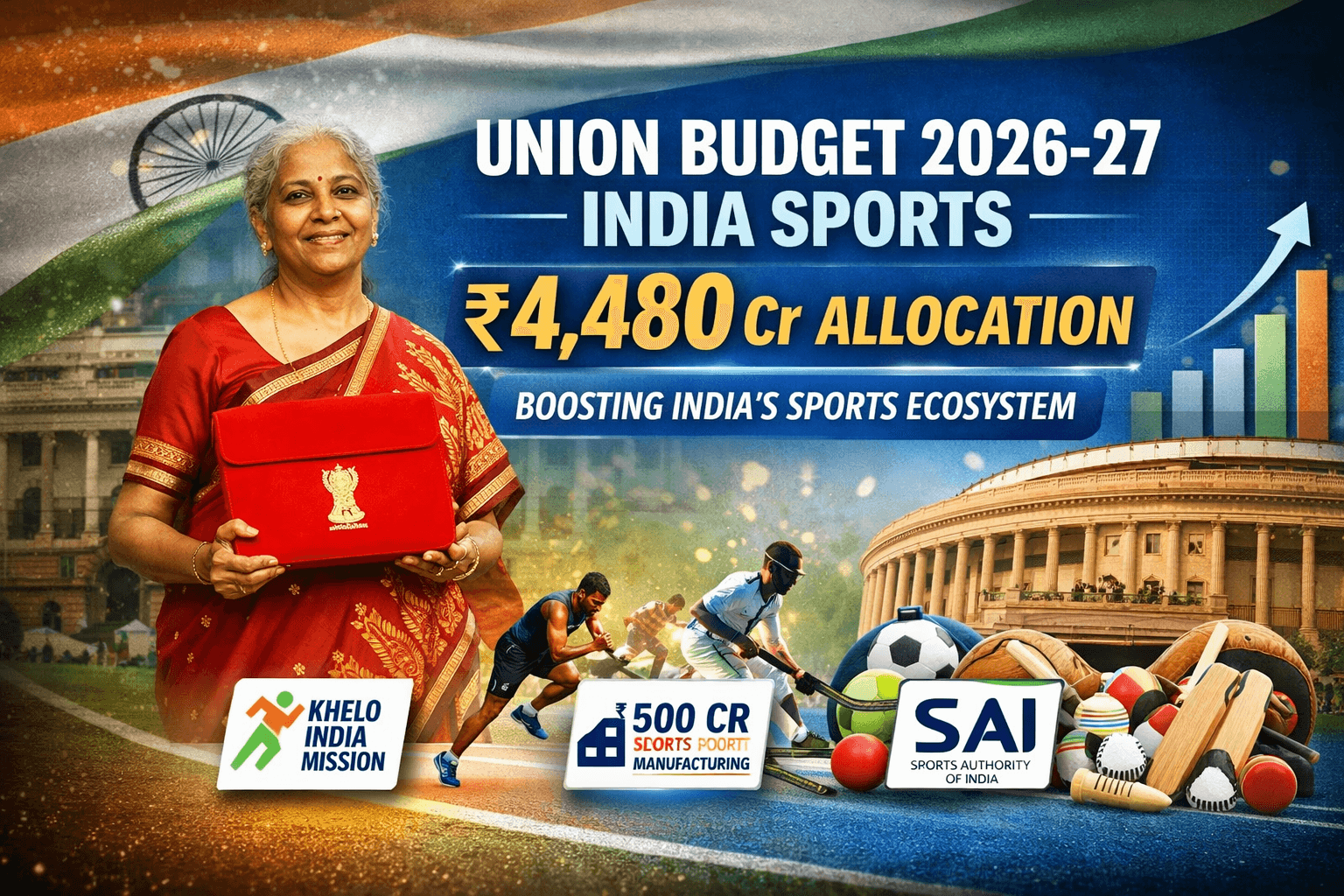
- India’s sports sponsorship market reached ₹16,633 Cr in 2024 (GroupM), with brands pouring record ₹1,224 Cr into athlete endorsements — yet fewer than 20% of sponsors have a formal method to measure ROI.
- Effective sports sponsorship ROI measurement goes beyond logo impressions and requires tracking brand equity uplift, digital engagement, audience quality, and commercial outcomes simultaneously.
- The GSK ROI Framework covers four distinct measurement layers: media value, brand impact, engagement quality, and business outcomes — giving brands a 360° view of their sponsorship investment.
- Emerging sports offer the highest ROI potential for mid-market brands in India, with non-cricket sponsorships growing 19% YoY and endorsements in emerging sports up 46% (Source: GroupM ESP, 2024).
India’s sports sponsorship market crossed ₹16,633 Crore in 2024, according to GroupM ESP’s 12th Sporting Nation report. Brands are spending more than ever on cricket, kabaddi, hockey, football, and athletics. Athlete endorsements alone hit a record ₹1,224 Cr — a 32% jump from the previous year. And yet, despite this explosion in sports sponsorship ROI India conversations, a striking problem persists: most brands still cannot clearly articulate what their sponsorship actually delivered.
This is not a niche problem. Research from the World Advertising Research Centre estimates that fewer than 20% of corporate sponsorship executives even have a structured method to measure ROI. In India, where franchise fees, jersey placements, broadcast integrations, and digital activations are increasingly layered and complex, that gap is costing brands crores in unquantified value.
At Global Sports Konnect, we work with brands, leagues, and rights holders across multiple sports. What we consistently find is that the brands getting the most out of their sports partnerships are not necessarily the ones spending the most — they’re the ones measuring the most. This blog breaks down exactly how to do that.
Table of Contents
- Why Sports Sponsorship ROI Is So Hard to Measure
- The Four Layers of Sponsorship Value
- The GSK Sponsorship ROI Framework
- Key Metrics Every Brand Should Track
- Sponsorship ROI Benchmarks: India Context
- Emerging Sports vs Cricket: Where ROI Is Heading
- Common Mistakes Brands Make When Measuring Sponsorship
- How to Build a Pre-Sponsorship ROI Baseline
- Frequently Asked Questions
- Conclusion and Next Steps
Why Sports Sponsorship ROI Is So Hard to Measure
Most brand managers can tell you exactly what a Google Ads campaign returned: impressions, clicks, conversions, cost per acquisition. Sports sponsorship, by contrast, doesn’t come with a performance dashboard built in. And that asymmetry creates a problem that goes much deeper than attribution.
The challenge is compounded by India’s specific market dynamics. With 73% of marketers globally citing measurement complexity as their biggest sponsorship challenge (Source: Sports Sponsorship Market Research, 2025), Indian brands face additional layers of fragmentation: multi-platform broadcast rights, a massive and demographically diverse fanbase, and activation ecosystems that span stadiums, social media, OTT platforms, and retail simultaneously.
The reality is that sports sponsorship delivers value in ways that a single number cannot fully capture. There is the brand affinity built over years of association with a beloved sport. There is the retail lift at a distributor’s shop in a Tier-2 city the day after a big match. There is the social conversation generated by an athlete’s Instagram story tagging your brand. None of these map cleanly onto a cost-per-click model.
This is precisely why a structured measurement framework matters. Without one, brands either over-attribute success when the sponsored team wins, or dismiss the entire investment when they can’t see a direct sales line.
The Four Layers of Sponsorship Value
Before diving into metrics and measurement tools, it helps to understand the hierarchy of value that any sports sponsorship creates. Think of it as four concentric circles, each building on the one inside it.
Layer 1: Media Value
This is the most commonly measured layer, and also the most incomplete if used in isolation. Media value refers to the equivalent advertising spend your brand would need to match the broadcast and digital impressions generated by your sponsorship — whether through logo visibility, brand mentions, or co-branded content.
For a title sponsor of an IPL team, this might mean calculating the value of jersey logo placements across 74 matches of live broadcast reaching 5+ crore viewers per match. For a sponsor of the Chhattisgarh Hockey League, it means tracking stadium signage exposure, Doordarshan broadcast integrations, and OTT streaming mentions across 17-18 matches.
Layer 2: Brand Impact
Brand impact measures the shift in how your target audience perceives your brand as a result of the sponsorship. This includes awareness uplift (did more people recall your brand after the tournament?), consideration scores (did intent to purchase increase?), and brand association strength (are people now linking your brand with qualities like performance, teamwork, or national pride?).
This is where AI-powered social listening tools have become genuinely useful. Platforms can track brand sentiment across X (formerly Twitter), Instagram, and YouTube before, during, and after a sponsorship period, giving brands a before-and-after picture of perception shifts.
Layer 3: Engagement Quality
Not all impressions are equal. A cricket fan who watched an ad during an IPL game is in a fundamentally different mindset than a fan who took a photo with your brand’s activation booth at the stadium, participated in a contest to win signed merchandise, or watched an athlete they admire personally demonstrate your product on Instagram.
Engagement quality measures the depth, not just width, of your brand’s sports connection. Metrics here include activation participation rates, social sharing volumes, hashtag usage, fan community growth, and Net Promoter Score shifts among sports-audience segments.
Layer 4: Business Outcomes
This is where sponsorship ROI becomes most defensible in a boardroom: direct and attributable business results. These include sales lift in markets where you activated on-ground, website traffic spikes during broadcast events, lead generation from hospitality and VIP access events, retail distribution expansion tied to co-branding, and customer acquisition from sports-channel campaigns.
The GSK Sponsorship ROI Framework: Measure Before You Sign
At Global Sports Konnect, we recommend brands follow a five-step process when approaching any sponsorship investment. This applies equally to a ₹50 Lakh regional event partnership and a ₹5 Crore title sponsorship of a franchise league.
Step 1: Define Objectives Before Negotiations Begin
What does your brand need? This sounds obvious, but in practice most brands enter sponsorship negotiations before they’ve aligned internally on what success looks like. Is the primary goal brand awareness in Chhattisgarh for a PSU launching a new consumer product? Is it corporate credibility for a fintech brand targeting young sports fans? Is it trade partner engagement for an FMCG brand with a distributor network in hockey-playing states?
Each objective leads to a different sponsorship structure, different activation strategy, and different measurement approach. Get the objective clarity first — it will also make you a far stronger negotiator when discussing rights packages.
Step 2: Establish Your Pre-Sponsorship Baseline
You cannot measure uplift without knowing where you started. Before signing any sponsorship agreement, commission a brand health survey within your target audience segment. Track your current unaided awareness, brand consideration scores, sentiment across social platforms, and website traffic from sports-interested audiences.
This baseline becomes your control number. Everything measured post-sponsorship is measured against it — not against a competitor’s data or industry averages, but against your own starting point.
Step 3: Negotiate Measurement Rights Into the Contract
This step is consistently overlooked and consistently costly. When negotiating a sponsorship, brands must ensure the rights package includes data access: official viewership and attendance numbers, social media analytics from the league’s official channels, broadcast impression reports, and activation footfall data.
Rights holders who are serious partners — and this is something GSK builds into every CHL 2026 sponsorship structure — provide transparent reporting dashboards. If a rights holder cannot or will not provide post-event data, that is information about the quality of the partnership itself.
Step 4: Deploy Multi-Channel Tracking
Run your measurement across at least four channels simultaneously: broadcast monitoring for logo and brand mention visibility, social media listening for organic brand conversations, dedicated UTM tracking links for all digital integrations, and point-of-sale data tracking in markets where you activate on-ground.
Step 5: Post-Sponsorship Brand Health Re-Survey
Within 4-6 weeks of the event or season ending, re-survey the same audience segment using the same methodology as your baseline. Measure shifts in awareness, consideration, sentiment, and brand associations. This data becomes the foundation for your ROI report and your next negotiation.
Key Metrics Every Brand Should Track
Below is a practical reference for the metrics that matter most at each layer of sponsorship value, calibrated for the Indian sports context.
| Measurement Layer | Key Metric | How to Measure | Benchmark (India Context) |
| Media Value | Equivalent Advertising Value (EAV) | Broadcast monitoring + rate card comparison | Target: 3x–5x investment in EAV |
| Media Value | Share of Voice in Category | Social listening vs. competitor brands | Top-quartile: >15% share during event |
| Brand Impact | Unaided Brand Awareness Uplift | Pre/post consumer survey | Strong: +5% uplift in target segment |
| Brand Impact | Brand Consideration Score Shift | Pre/post survey | Strong: +3-8% uplift |
| Brand Impact | Brand Association Strength | Association mapping survey | Qualitative + quantitative |
| Engagement Quality | Activation Participation Rate | On-ground footfall / contest entries | Target: >5% of event footfall |
| Engagement Quality | Social Engagement Rate | Total engagements ÷ Impressions | Sports content avg: 4-8% in India |
| Engagement Quality | Net Promoter Score (NPS) Shift | Fan survey (brand NPS subset) | Positive delta vs. pre-event |
| Business Outcomes | Website Traffic Lift | GA4 analytics during event period | Target: 20-40% spike on match days |
| Business Outcomes | Sales Lift in Activation Markets | POS data, distributor reports | Category-dependent |
| Business Outcomes | Lead Generation Volume | Hospitality events, digital captures | Fully trackable with UTM links |
Sponsorship ROI Benchmarks: Understanding the India Context
India’s sports sponsorship ecosystem crossed ₹16,633 Crore in total market size in 2024 (GroupM ESP). Within that, direct sponsorship spending stood at ₹7,421 Crore, while media advertising in sports added another ₹7,989 Crore. The remaining ₹1,224 Crore went to athlete endorsements — a segment that grew 32% YoY and crossed the ₹1,000 Crore mark for the first time.
Cricket still commands 85% of overall industry revenue and 76% of total sponsorship value at ₹5,610 Crore. However, the faster-growing opportunity for brands — and the one with structurally higher ROI potential for non-legacy players — is in emerging sports.
Sponsorships in non-cricket sports grew 19% to ₹2,461 Crore in 2024, while endorsements in emerging sports categories jumped 46% YoY. Digital media spending across all sports surged 25%, reaching ₹3,588 Crore. These are not marginal signals — they are structural shifts in where sponsorship value is being created.
For a mid-market brand with a ₹1-5 Crore sponsorship budget, this data suggests a clear strategic direction: the best ROI in Indian sports right now is not in outbidding a multinational for a cricket jersey sleeve — it’s in securing category-exclusive partnerships in sports like hockey, kabaddi, wrestling, or athletics, where fanbase growth is outpacing sponsorship inventory.
Emerging Sports vs Cricket: Where Sports Marketing ROI Is Heading
The most important structural shift in Indian sports sponsorship over the next three to five years is the rising commercial efficiency of non-cricket properties. Understanding this shift is essential for any brand building a long-term sports marketing strategy.
| Dimension | IPL / Top Cricket | Emerging Sports Leagues |
| Entry Cost (Title Sponsorship) | ₹300 Cr–500 Cr/year | ₹3 Cr–15 Cr/year |
| Brand Recall in Category | High (but crowded) | High (exclusive opportunity) |
| Fan Engagement Rate | Moderate (high volume) | High (passionate, niche) |
| Category Exclusivity Possible? | Limited (many sponsors) | Yes (early mover advantage) |
| YoY Sponsorship Growth | 1% (2024, stabilizing) | 19% (2024, accelerating) |
| Athlete Endorsement Growth | Included in cricket | 46% YoY (non-cricket, 2024) |
| Ideal Brand Type | Mass market, large budget | Regional, growing, challenger brand |
This does not mean cricket sponsorship is a poor investment. For a brand that needs national scale, mass awareness, and association with India’s dominant cultural property, cricket remains unmatched. But for a brand trying to establish category leadership in a specific region or demographic — or build deep emotional equity at a fraction of cricket’s cost — the emerging sports window is wide open and won’t stay that way for long.
The Chhattisgarh Hockey League, launching in June 2026 with 6 franchise teams and 17-18 matches over 13 days in Raipur, is precisely this kind of opportunity. Title sponsorship is priced at ₹3-5 Crore — a fraction of what a single associate partnership at a top cricket property costs — with category exclusivity, Doordarshan broadcast integration, stadium naming rights, and deep Chhattisgarh market penetration included.
Common Mistakes Brands Make When Measuring Sponsorship ROI
Measuring Only Media Value
The most common mistake is treating Equivalent Advertising Value (EAV) as the final ROI number. EAV tells you how much your logo was seen — it says nothing about whether that visibility shifted brand preference, drove purchase intent, or changed any measurable business outcome. EAV is a starting point, not an endpoint.
Failing to Establish a Pre-Sponsorship Baseline
Without a baseline, any claimed improvement after the sponsorship period is anecdotal. You cannot say your brand awareness among 18-30 year-old sports fans improved by 8 percentage points unless you measured what that awareness was before you signed the deal. Baseline research is the most underfunded and overlooked step in sponsorship measurement.
Confusing Team Performance With Sponsorship Performance
A title sponsor’s brand is not more valuable because the team they sponsored won the championship. And it is not less valuable because the team had a poor season. Sponsorship ROI must be measured against brand objectives, not match results. Conflating the two leads to short-term sponsor churn and long-term instability for both brands and sports properties.
Ignoring Activation Investment
The sponsorship fee is not the total investment — it’s the entry ticket. The brands that consistently show strong ROI from sports partnerships spend 50-70% of their sponsorship fee on activation: experiential marketing at the venue, social content campaigns, athlete-led product integrations, retail tie-ins. Passive logo placement without activation is one of the lowest-ROI uses of sponsorship budget.
How to Build a Pre-Sponsorship ROI Baseline
A brand health baseline doesn’t require a ₹50 Lakh research agency engagement. For a mid-market brand, a focused baseline study can be designed and executed within three to four weeks at a fraction of that cost. Here is a practical template:
Audience Definition
Define the specific audience segment that matters for your sponsorship objectives. For a Chhattisgarh-based industrial brand targeting the state’s 33+ lakh middle-income households, that means a geographically focused sample. For a national fintech targeting youth, it means a demographically focused digital panel.
Core Metrics to Capture
- Unaided brand awareness: What brands come to mind when you think of [category]?
- Aided brand awareness: Have you heard of [your brand]?
- Brand consideration: How likely are you to use/purchase [your brand] in the next 3 months?
- Brand associations: Which of the following words do you associate with [your brand]?
- Sports consumption habits: Which sports/leagues do you follow? How often? On which platform?
- Competitor awareness: A benchmark set of the same questions for your top 2-3 competitors.
Running this same survey 4-6 weeks after the sponsorship period ends gives you the data to calculate a genuine, defensible sponsorship ROI number. GSK’s brand-sport partnership consulting service includes baseline and post-sponsorship survey design as a standard deliverable for all clients entering new sports partnerships.
Frequently Asked Questions
What is sports sponsorship ROI and how is it calculated in India?
Sports sponsorship ROI measures the value a brand receives relative to its total investment in a sports partnership. The basic formula is: ROI = (Value Generated – Total Investment) ÷ Total Investment × 100. However, ‘value generated’ must include media value, brand impact, engagement quality, and direct business outcomes — not just advertising equivalent value. In India, where market data is increasingly available through platforms like GroupM ESP and BARC, calculating a comprehensive ROI is more achievable than it was even three years ago.
How much should a brand spend on sports sponsorship in India?
There is no universal answer, but a general rule is that activation spending should be 50-70% of the rights fee. If you are paying ₹75 Lakhs for an associate sponsorship at a regional league, budget another ₹40-50 Lakhs for on-ground activation, social content, and audience research. Total sports marketing budgets for mid-market brands in India typically range from ₹1-10 Crore annually, with ROI improving significantly for brands that invest consistently over multiple seasons rather than one-off deals.
Is non-cricket sports sponsorship worth it for brands in India?
Yes, and the data increasingly supports this. Emerging sports sponsorships grew 19% in 2024, while endorsements in non-cricket categories jumped 46% (GroupM ESP). For brands that cannot compete at cricket’s price points, emerging sports offer category exclusivity, passionate fan communities, lower activation costs, and structurally higher engagement rates. The early-mover advantage in properties like the Chhattisgarh Hockey League or Premium Volleyball League is significant for brands willing to plant the flag now.
How do I measure the brand impact of a sports sponsorship?
Brand impact is best measured through pre- and post-sponsorship consumer surveys that track unaided awareness, brand consideration scores, and brand association strength within your target audience segment. Supplement this with AI-powered social listening that monitors sentiment and conversation volume around your brand across sports event windows. A meaningful brand impact measurement requires a baseline established before the sponsorship begins — without it, any post-event improvement is unmeasurable.
What is a good sponsorship ROI ratio for Indian brands?
Industry benchmarks suggest that a well-executed sports sponsorship should deliver between 3x–5x return in Equivalent Advertising Value relative to the rights fee alone. When activation investment is included in the total cost, strong campaigns in India’s sports market target a media ROI of 2x–3.5x the total investment. Brand equity improvements and direct sales attribution add further value that doesn’t always convert cleanly to a ratio but matters significantly for long-term brand building.
How can small and mid-size brands benefit from sports sponsorship in India?
The highest ROI opportunities for smaller brands in India are in state-level and regional sports properties, official partner-tier packages (₹25-75 Lakh range) in emerging leagues, athlete endorsements in non-cricket sports, and community activation at grassroots events. These entry points offer genuine audience access, category exclusivity, and significantly stronger brand recall per rupee spent than equivalent digital advertising in many categories. The key is choosing a property whose fanbase aligns with your customer profile — and then activating strategically rather than relying on passive logo placement.
How does CHL 2026 sponsorship generate ROI for brands?
The Chhattisgarh Hockey League (June 10-22, 2026) provides a multi-channel ROI path for sponsors: broadcast visibility on Doordarshan with 8-camera HD production, digital content rights, stadium naming and signage, jersey placement across 6 franchise teams, hospitality access for client engagement, and deep penetration into Chhattisgarh’s 3.3 Crore population — including significant tribal and youth demographics that are difficult to reach through conventional media. With title sponsorship priced at ₹3-5 Crore, CHL offers a scale and exclusivity ratio that is exceptionally attractive relative to cricket properties at comparable visibility.
What role do analytics play in measuring sports sponsorship ROI?
Analytics are central to modern sponsorship ROI measurement. Broadcast monitoring tools use computer vision to track logo exposure duration, placement quality, and visibility across TV and streaming platforms. Social listening platforms monitor brand mentions, sentiment shifts, and audience demographics across Instagram, YouTube, and X. Performance dashboards integrate these streams into unified reporting, allowing brands to see ROI in near-real-time and adjust activations during a live event. GSK’s analytics and insights service helps brands build these measurement architectures before a sponsorship begins, not after.
Conclusion: Measure What Matters, Then Invest with Confidence
India’s sports sponsorship ROI story in 2026 is not just about bigger numbers — it’s about smarter money. The brands winning in sports partnerships are not the ones with the biggest cheques. They are the ones with the clearest objectives, the most disciplined measurement frameworks, and the strategic patience to build genuine fan-brand relationships over time.
The market data is compelling: ₹16,633 Crore in total sponsorship value, 19% growth in emerging sports, 46% growth in non-cricket endorsements, 25% surge in digital sports media spending. The opportunity is real, it is growing, and the brands that understand how to measure what they get from it will compound their advantage year after year.
Whether you are a national brand evaluating a multi-crore cricket partnership, a regional PSU looking at the Chhattisgarh Hockey League, or a challenger brand exploring athlete endorsements in badminton or wrestling — the framework is the same: define your objectives, establish your baseline, negotiate measurement rights, activate with intent, and measure the outcomes against where you started.
At Global Sports Konnect, we work with brands across every stage of this process — from initial sponsorship strategy to rights valuation, activation design, and post-campaign ROI reporting. We have built these processes into everything we do, including the CHL 2026 sponsorship structures where every tier includes transparent reporting dashboards and defined brand impact deliverables.
Ready to measure your sports sponsorship ROI with confidence?
Talk to the GSK sponsorship strategy team about building a measurement-first sports partnership — from baseline research and rights valuation to activation design and post-campaign ROI reporting.
Contact us: info@globalsportskonnect.com | +91 9873777697
Book an intro call: https://calendly.com/globalsportskonnect
Explore our sponsorship services: https://globalsportskonnect.com/services/sponsorship-media-rights/
SEO CHECKLIST
✅ Primary keyword in first 100 words
✅ Word count: ~2,400 words
✅ Key Highlights box included
✅ 4-6 internal links (sponsorship services, analytics, contact, CHL/events pages)
✅ 2-3 external authority links (GroupM ESP, WARC/global benchmarks)
✅ FAQ section (8 questions)
✅ CTA at conclusion with contact + service link
✅ Data tables included (metrics framework + emerging vs cricket comparison)
✅ Meta title under 60 characters
✅ Meta description under 158 characters
IMAGE SUGGESTIONS
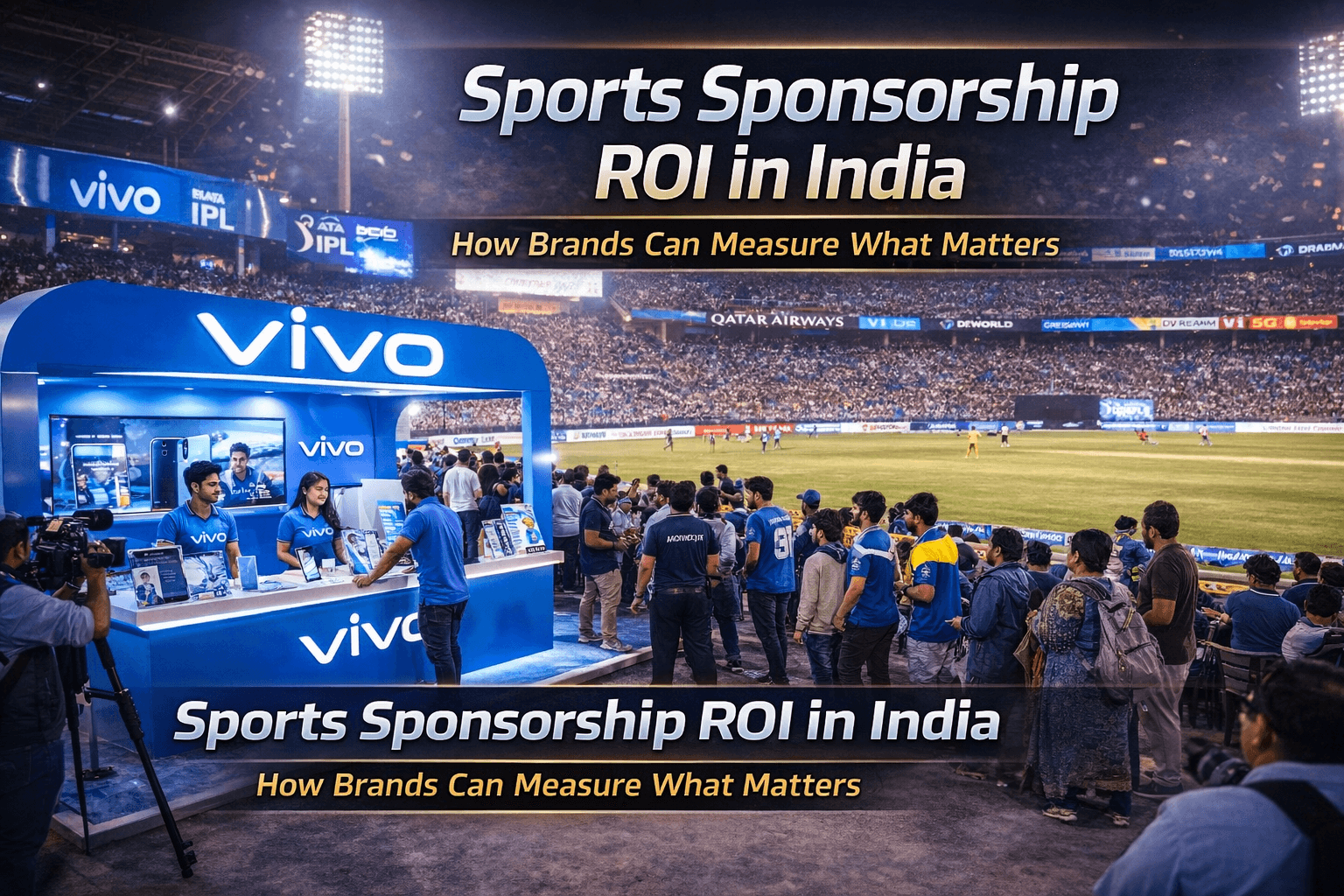
Featured Image (1200x630px): A brand activation booth at an Indian sports event — stadium banners and digital signage visible in background. Alt text: ‘Sports sponsorship ROI measurement India — brand activation at sports event’
In-Content Image 1: An infographic showing the four-layer GSK ROI framework (Media Value → Brand Impact → Engagement Quality → Business Outcomes) as a funnel. Alt text: ‘GSK sports sponsorship ROI framework India four layers’
In-Content Image 2: Data visualization of India’s sports sponsorship market growth from 2008 to 2024 (₹2,000 Cr → ₹16,633 Cr). Alt text: ‘India sports sponsorship market size growth 2008-2024 GroupM data’
Infographic Opportunity: The GSK 5-Step Sponsorship ROI Framework as a process infographic for social media sharing.
WORDPRESS TAGS
Categories: Sports Business, Sponsorship, Brand Marketing
Tags: sports sponsorship ROI, sponsorship measurement India, brand sports partnership, sports marketing ROI, GroupM ESP, CHL 2026, sports sponsorship strategy, emerging sports India, hockey sponsorship, athlete endorsements India